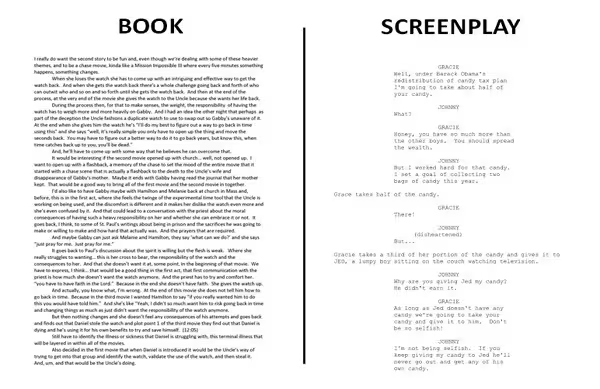

Adapting a novel or book into a screenplay is a challenging yet rewarding process and novel-to-screenplay adaptation requires a deep understanding of both mediums. While a novel provides the luxury of extensive narrative and detailed character development, a screenplay is a blueprint for a visual medium where brevity and focus are paramount. To successfully transform a book into a film, writers must distill the essence of the story, reimagine the narrative structure, and translate internal thoughts into visual actions and dialogue. Here’s a comprehensive guide on how to adapt a novel or book into a screenplay.
1. Read and Analyze the Source Material Thoroughly
The first step in any adaptation process is to thoroughly read and understand the source material. This means not just reading the book but analyzing its themes, characters, plot, and narrative structure. It’s crucial to identify the core elements of the story—what makes it compelling, and what aspects are essential to its identity. Pay attention to the themes that resonate, the character arcs, and the overall tone. This analysis will help you determine what should be retained, what can be condensed, and what might need to be altered to fit the cinematic format.
For instance, in The Lord of the Rings adaptation, screenwriters Fran Walsh, Philippa Boyens, and director Peter Jackson (2001) had to make significant cuts and changes to J.R.R. Tolkien’s dense narrative to create a coherent and engaging film trilogy. They focused on the central narrative of Frodo’s journey while omitting or condensing subplots and characters that would not translate well to film.
2. Identify the Key Scenes and Plot Points
Once you’ve analyzed the book, the next step for screenplay adaptation is identifying the key scenes and plot points that will drive your screenplay. Not every scene in the book will make it to the screen. Instead, select the most pivotal moments that move the story forward and develop the characters. In a screenplay, every scene must serve a purpose—whether it’s to advance the plot, reveal character, or create tension.
For example, in the adaptation of Fight Club (1999), screenwriter Jim Uhls and director David Fincher chose to focus on the most visually and thematically striking elements of Chuck Palahniuk’s novel. The screenplay emphasizes the central conflict and key events, such as the formation of the Fight Club and the protagonist’s descent into madness, while leaving out less crucial parts of the book.
3. Streamline the Narrative
Novels often contain subplots, internal monologues, and extensive background information that can be difficult to translate into a visual medium. Streamlining the narrative is essential when adapting a book into a screenplay. This means trimming or combining characters, condensing multiple scenes into one, and eliminating subplots that do not directly contribute to the main story arc.
Take Gone Girl (2014) as an example. Gillian Flynn, who adapted her own novel for the screen, had to streamline the narrative to fit the film’s runtime. She focused on the central mystery and psychological tension, omitting some of the novel’s more detailed backstories and side plots to maintain the pacing and tension of a thriller.
4. Translate Internal Thoughts into Visuals
One of the biggest challenges in adapting a novel is translating the internal thoughts of characters into visual actions or dialogue. In a book, much of the story might be told through a character’s thoughts or feelings, but in a screenplay, this needs to be shown through what characters do and say.
For instance, in the adaptation of American Psycho (2000), screenwriter Guinevere Turner and director Mary Harron had to convey the disturbing inner thoughts of Patrick Bateman through his actions and dialogue rather than through internal monologues. The film uses visual cues, such as Bateman’s meticulous grooming routines and his violent outbursts, to illustrate his psychopathic nature.
5. Maintain the Tone and Style of the Original
While it’s important to make changes to fit the cinematic medium in screenplay adaptation, it’s equally important to maintain the tone and style of the original work. The screenplay should capture the spirit of the book, whether it’s the humor, the horror, the drama, or the romance.
In the case of The Shining (1980), Stanley Kubrick and co-writer Diane Johnson took Stephen King’s horror novel and adapted it into a screenplay that retained the eerie atmosphere and psychological horror of the original, even though the film deviated from the book in several key areas. The adaptation is a masterclass in how to maintain the essence of the source material while making it work in a different medium.
6. Revise and Get Feedback
After writing your first draft, it’s crucial to revise your screenplay and seek feedback. The adaptation process is iterative, and the first draft is rarely the final one. Look for ways to tighten the script, improve dialogue, and ensure that the pacing works. Feedback from others, especially those familiar with both the book and screenwriting, can provide valuable insights.
As screenwriter William Goldman famously said, “Screenplays are structure.” Ensuring that your screenplay has a strong structure is essential for it to be successful.
7. Work Closely with the Director and Producers
Finally, for the screenplay adaptation remember that film is a collaborative medium. Working closely with the director and producers will ensure that your screenplay aligns with their vision for the film. This collaboration might involve making further changes to the script to fit the director’s style, the film’s budget, or other production considerations.
For example, the adaptation of Forrest Gump (1994) by screenwriter Eric Roth involved close collaboration with director Robert Zemeckis. Roth’s screenplay took creative liberties with Winston Groom’s novel to enhance the film’s visual storytelling and emotional impact, ultimately resulting in a critically acclaimed and award-winning film.
Adapting a novel or book into a screenplay is a complex process that requires careful consideration of what to keep, what to change, and how to translate a story from page to screen. By thoroughly analyzing the source material, focusing on key scenes, streamlining the narrative, translating internal thoughts into visuals, maintaining the original tone, revising the script, and collaborating with the production team, you can create a screenplay that honors the spirit of the book while standing on its own as a compelling film.