

Flashbacks are among the most useful storytelling techniques in screenwriting, but they are also among the most frequently misused. A well-placed flashback can reveal a character’s hidden motivations, deepen an emotional conflict, or completely change how an audience understands a story. A poorly placed one, however, can interrupt the narrative, slow the pacing, and explain information that would have been more compelling if discovered naturally.
The challenge for screenwriters is not simply knowing how to write a flashback. It is understanding why the story needs one in the first place.
In this guide, we will explore what flashbacks are, how they function in cinematic storytelling, when they are appropriate, when they should be avoided, and how to format them in a professional screenplay.
What Is a Flashback in Screenwriting?
A flashback is a narrative technique that temporarily moves the story backward in time to show events that happened before the current point in the narrative.
Rather than describing past events through dialogue or exposition, a flashback allows the audience to experience them visually.
For example, imagine a film about a woman who refuses to enter the ocean. Throughout the story, her fear appears irrational. Later, a flashback reveals that she witnessed her younger brother drowning when they were children.
Suddenly, her fear becomes understandable, and her emotional conflict takes on a deeper meaning.
The flashback does more than provide background information. It changes how the audience interprets the character.
However, flashbacks do not always need to explain trauma or reveal secrets. They can also establish relationships, develop themes, contrast the past with the present, or create dramatic irony.
The defining feature of a flashback is its position in the narrative: it presents an earlier event after the story has already progressed beyond it.
Why Do Screenwriters Use Flashbacks?
Before learning how to use flashbacks in your screenplay, it is important to understand their narrative purpose.
Flashbacks generally perform several functions.
1. Revealing character motivations
People are shaped by their experiences, and characters are no different.
A flashback can reveal why a character behaves in a particular way, especially when their actions seem contradictory or difficult to understand.
Consider a character who consistently refuses help from others. A brief flashback might reveal an earlier betrayal that explains their distrust.
The audience now understands the emotional reasoning behind the character’s behavior.
Nevertheless, a screenwriter should avoid assuming that every personality trait requires an explanatory flashback. Sometimes a character’s present actions communicate enough.
2. Revealing important information
Flashbacks can introduce details that the audience did not previously know.
In a mystery, for instance, the protagonist might recall an overlooked conversation that changes their interpretation of a crime.
The key is to make the revelation meaningful.
A successful flashback should affect the audience’s understanding of the story or influence what happens next. It should not merely repeat information already established.
3. Creating emotional depth
Flashbacks can establish an emotional connection between the audience and a character.
Imagine an elderly man sitting alone at a dining table, staring at an empty chair.
A flashback shows him and his late wife sharing breakfast at that same table decades earlier.
The contrast between past happiness and present loneliness creates an emotional experience that might be difficult to achieve through dialogue alone.
In this situation, the flashback is not necessarily delivering new plot information. Its function is emotional and thematic.
4. Building suspense and mystery
A flashback can reveal information gradually rather than all at once.
For example, a character may remember fragments of a disturbing event. Each new fragment adds to the audience’s understanding until a final revelation changes the meaning of everything that came before.
This technique is particularly useful in psychological thrillers and mysteries.
However, withholding information must feel justified. If the screenplay deliberately conceals something the viewpoint character clearly knows simply to manufacture a twist, audiences may feel manipulated.
When Should You Use Flashbacks in Your Screenplay?
There is no universal rule about how many flashbacks a screenplay should contain. Their effectiveness depends on the genre, narrative structure, character development, and intended audience experience.
The following situations are generally appropriate.
When the past directly influences the present: A flashback works particularly well when an earlier event explains a decision, conflict, or relationship unfolding in the current narrative.
When showing is more powerful than telling: If a past event carries significant dramatic or emotional weight, showing that event may be more compelling than having characters discuss it.
When a revelation changes the story: An effective flashback can challenge an audience’s assumptions, alter the meaning of an earlier scene, or introduce information that raises the stakes.
When the past and present create meaningful contrast: Showing who a character once was can help establish who they have become. This contrast can reinforce themes such as loss, corruption, ambition, or regret.
When non-linear storytelling is central to the film: Some screenplays are deliberately structured around multiple timelines. In these stories, scenes from the past are not occasional interruptions but essential components of the narrative.
The most important principle is that a flashback should serve the story’s dramatic purpose rather than simply provide information.
When Should You Avoid Flashbacks?
Knowing when not to use flashbacks is just as important as knowing how to write them.
When they interrupt an important dramatic moment
If a confrontation is reaching its emotional peak, inserting a lengthy flashback may weaken the momentum. The audience is invested in the present conflict, and moving away from it can reduce the scene’s intensity.
When they explain what the audience already understands
Suppose a character says, “My father abandoned us when I was seven.” Immediately showing a flashback of the father leaving may be redundant unless the scene adds an important new perspective or contradiction.
When they replace character development
A screenwriter should not rely on childhood trauma or a tragic backstory as the sole explanation for a character’s personality. Characters must still develop through choices, actions, and conflicts in the present.
When they exist only to deliver exposition
Flashbacks should be dramatic scenes, not visual information dumps. If a flashback exists solely to explain family history, political circumstances, or background facts, consider whether that information could emerge more naturally.
When they make the story unnecessarily complicated
Frequent jumps between timelines can make it difficult for audiences to follow a story, particularly when the transitions lack clear dramatic or visual distinctions.
A flashback should never be included simply because the writer believes it makes the story appear more sophisticated.
Complexity is not the same as depth.
Examples of Effective Flashbacks in Cinema
Some of cinema’s most memorable films demonstrate how flashbacks can contribute to characterization, thematic development, and narrative structure.
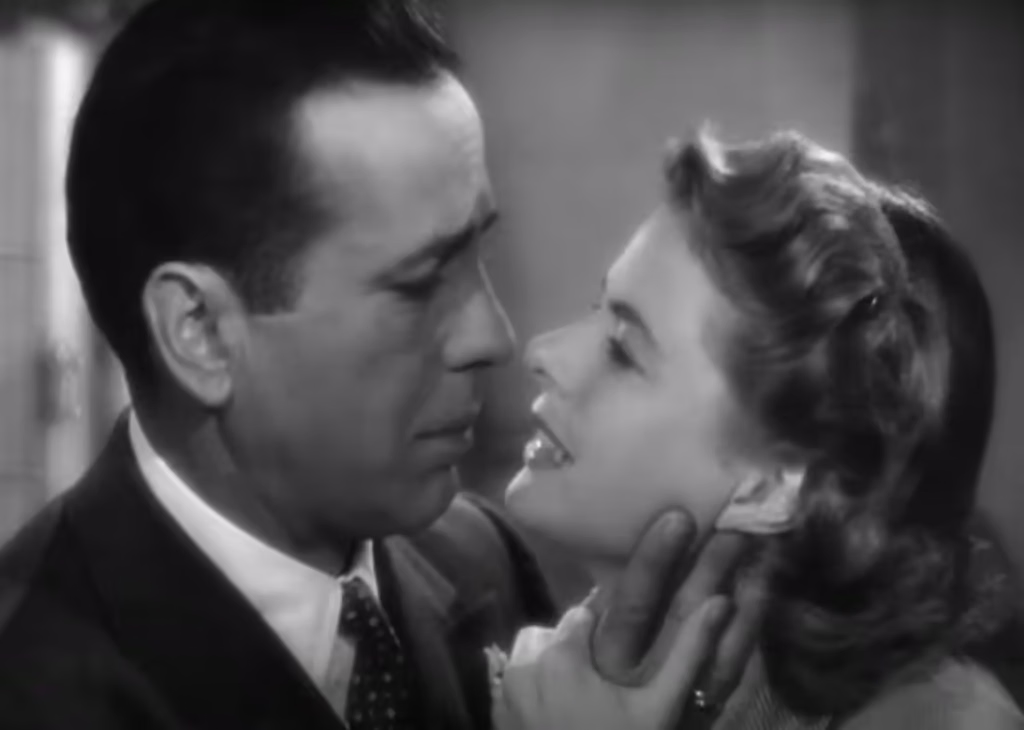
Casablanca (1942)
Director: Michael Curtiz
Screenwriters: Julius J. Epstein, Philip G. Epstein and Howard Koch
The film uses a flashback to Paris to reveal the romantic history between Rick and Ilsa. This earlier relationship gives emotional context to Rick’s bitterness and makes their present encounter more meaningful.
Rather than explaining Rick’s entire emotional history through dialogue, the film allows audiences to experience the relationship and the circumstances surrounding its collapse.
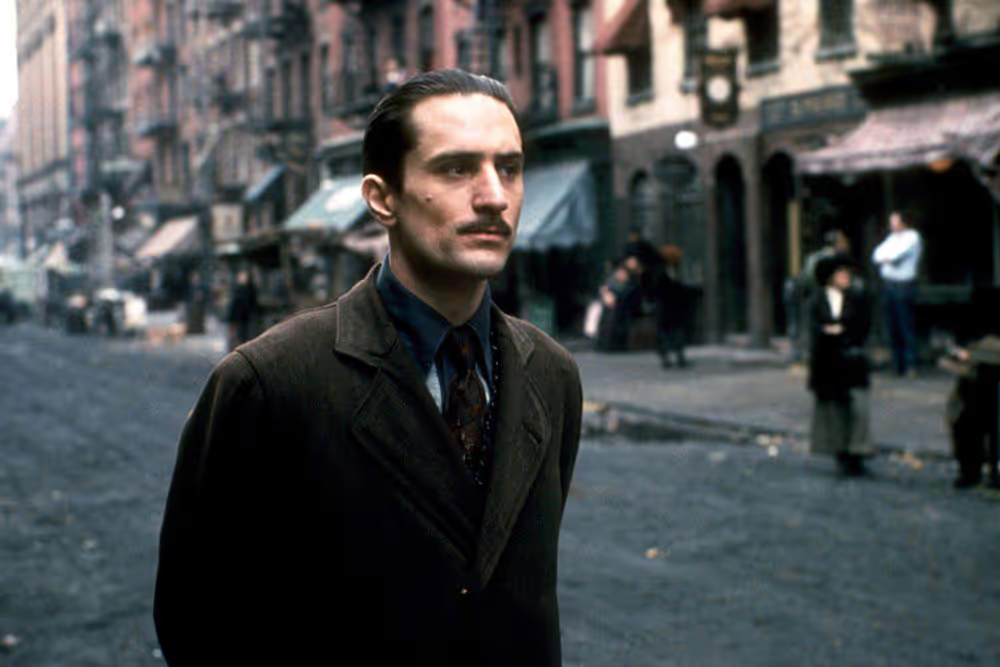
The Godfather Part II (1974)
Director: Francis Ford Coppola
Screenwriters: Francis Ford Coppola and Mario Puzo
The film alternates between Michael Corleone’s leadership of the family and the earlier life of his father, Vito Corleone.
The earlier timeline explores Vito’s rise to power, while Michael’s storyline follows the consequences of maintaining it. Together, they create a thematic contrast between two generations, particularly regarding power, loyalty, and family. Turner Classic Movies+1
These examples demonstrate two different approaches to writing flashbacks.
In Casablanca, the flashback provides an emotionally important piece of the characters’ shared history.
In The Godfather Part II, the earlier timeline becomes a major structural element of the screenplay.
Both approaches work because the past contributes something essential to the audience’s experience of the present.
How to Format a Flashback in a Screenplay
Understanding how to use flashbacks in your screenplay also means presenting them clearly on the page.
There is no single mandatory industry-wide formatting convention, but the screenplay should make it immediately clear when the story has moved into the past and when it returns to the present.
One common approach is to include FLASHBACK in the scene heading.
Here is an original example:
SCREENPLAY EXAMPLE

INT. FAMILY HOUSE - NIGHT

SARAH (32) stands in the hallway, staring at an old photograph.

Her fingers tremble as she touches the glass.

FLASHBACK - INT. FAMILY HOUSE - DAY (2005)

A younger SARAH (11) runs down the hallway.

Her MOTHER waits by the front door, holding a suitcase.

SARAH
Mom? Where are you going?

Her mother hesitates, then opens the door.

BACK TO PRESENT

INT. FAMILY HOUSE - NIGHT

Sarah lowers the photograph. Tears fill her eyes.
Illustrative screenplay formatting. In screenwriting software, scene headings, action and dialogue should use standard screenplay margins and indentation.
The example establishes the present timeline, introduces a visual trigger, moves into the past, and then returns to the present.
Notice that the flashback focuses on a specific dramatic moment rather than attempting to explain Sarah’s entire childhood.
If a flashback contains several consecutive scenes, writers can also use BEGIN FLASHBACK and END FLASHBACK to mark the sequence. Another option is to identify the earlier year in each scene heading.
Clarity and consistency are more important than choosing one particular convention.
Bring Your Story to Life
Explore professional screenwriting and storytelling services tailored to your next creative project.
Screenplay Writing
Original feature-length screenplays crafted for compelling cinematic storytelling.
Explore Service → 02Script Adaptation
Transform novels, books, and existing stories into professionally structured screenplays.
Explore Service → 03Script Rewriting & Editing
Improve dialogue, pacing, character arcs, and overall screenplay structure.
Explore Service → 04TV & Series Writing
Develop television pilots, episodic scripts, and engaging serialized narratives.
Explore Service → 05Story Development
Turn an initial idea into an engaging treatment, outline, or fully developed narrative.
Explore Service → 06Short Film Scripts
Powerful short-form scripts built around memorable characters and focused storytelling.
Explore Service →Have a Story Worth Telling?
Let’s turn your idea into a screenplay.
How Long Should a Flashback Be?
A flashback can last a few seconds, several minutes, or even an entire sequence.
Its appropriate length depends on its dramatic importance.
| Flashback type | Typical use |
|---|---|
| Brief visual memory | A quick image or significant moment |
| Short dramatic scene | A relationship, conflict, or revelation |
| Extended flashback sequence | A major turning point from the past |
| Multiple-timeline narrative | A substantial part of the overall film |
These are categories, not rigid duration rules.
A five-second image can sometimes communicate more than a five-minute scene.
The practical question is whether every moment of the flashback contributes to the story.
If the sequence has delivered its intended revelation, emotional impact, or thematic contrast, there may be little reason to continue it.
Five Ways to Make Your Flashbacks More Effective
Once you have established that a flashback is necessary, the next challenge is integrating it naturally into the screenplay.
1. Give the flashback a dramatic purpose. Identify exactly what it reveals, changes, or adds. If removing it does not materially affect the story, reconsider its inclusion.
2. Create a meaningful transition. A location, object, sound, line of dialogue, or emotional experience can motivate a transition into the past. Not every flashback needs an explicit trigger, but transitions should feel deliberate.
3. Build a scene rather than an explanation. Characters in flashbacks should have goals, conflicts, and choices. The past should feel alive rather than like an illustrated biography.
4. Establish the timeline clearly. Different locations, ages, relationships, costumes, or contextual details can help audiences recognize when events are taking place. In the screenplay itself, clear scene headings are particularly valuable.
5. Return to the present with a consequence. A strong flashback often affects how the audience understands the next scene. It may also motivate a character’s decision or make an existing conflict more emotionally significant.
The fifth principle is especially important.
A flashback should ideally create a connection between the past and present. Otherwise, the scene risks feeling disconnected from the main narrative.
Flashbacks vs. Other Narrative Techniques
Not every scene involving the past is necessarily a conventional flashback.
| Technique | How it works |
|---|---|
| Flashback | Temporarily moves the narrative to an earlier event |
| Flashforward | Shows an event occurring later than the current story timeline |
| Non-linear narrative | Presents events in an order different from their chronology |
| Memory sequence | Represents a character’s recollection, potentially distorted or incomplete |
| Dream sequence | Shows a dream rather than necessarily depicting something that happened |
| Expository dialogue | Communicates past events through what characters say |
These techniques can overlap.
For example, a flashback might also be a subjective memory sequence. A non-linear screenplay might contain numerous flashbacks or alternate between timelines without establishing one as the primary present.
Screenwriters should understand the distinction because each technique creates a different relationship between the audience, the characters, and the information being presented.
Make the Past Serve the Present
Flashbacks are not shortcuts for explaining a complicated story. They are storytelling tools that can deepen characterization, develop themes, reveal information, and strengthen a film’s emotional impact.
The most effective flashbacks do not simply tell the audience what happened before. They change how the audience understands what is happening now.
A flashback becomes valuable when the past creates new meaning in the present.
As a screenwriter, the goal is not to avoid flashbacks entirely or to use them as frequently as possible. It is to recognize when a story genuinely benefits from leaving its present timeline.
The fundamental rule is simple: If the past does not make the present more compelling, it probably does not need to be shown.